


Dentist in London Blog
What oral appliance vs CPAP really means
23
Sep
Sep
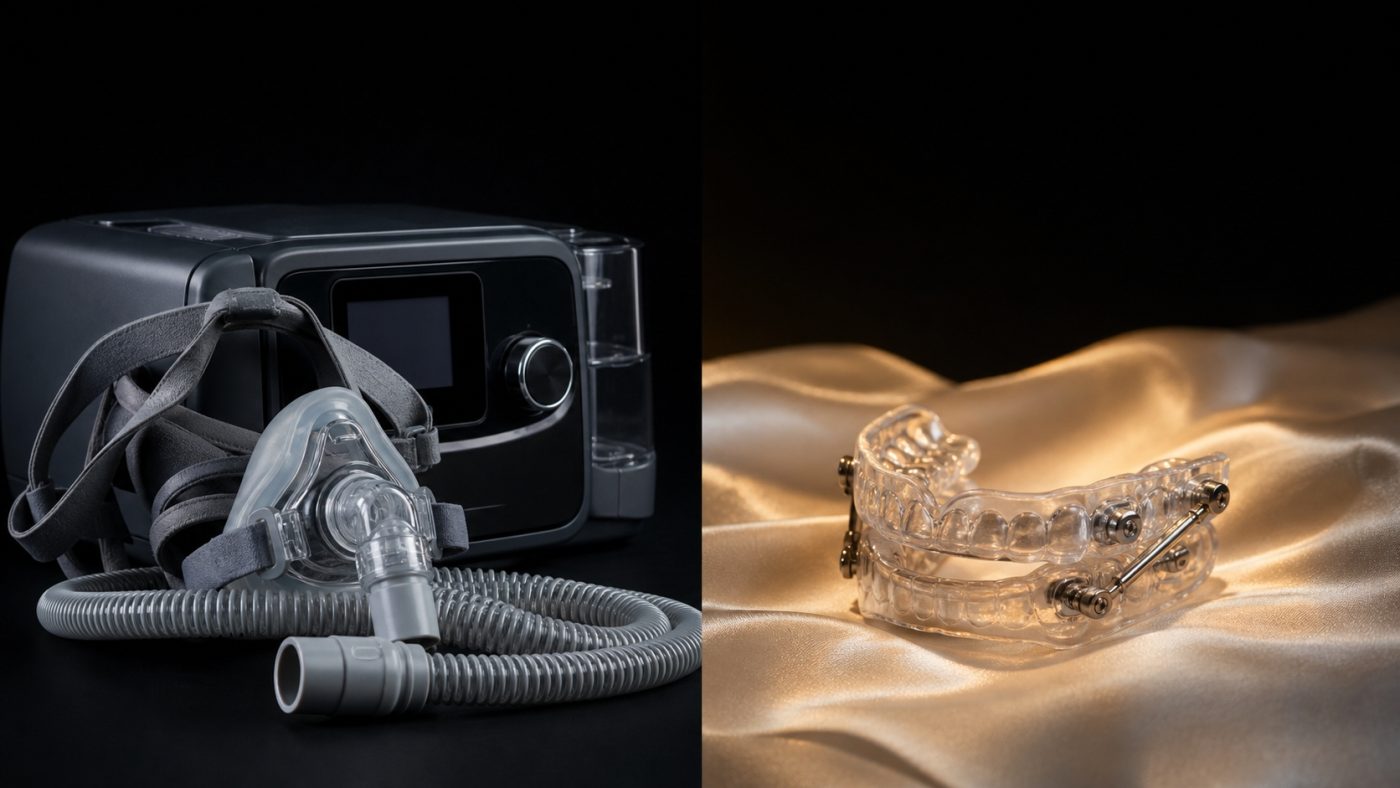
Sleep-disordered breathing covers a spectrum from primary snoring to obstructive sleep apnea (OSA). OSA is not diagnosed from snoring alone; diagnosis requires a medical sleep evaluation and objective testing such as a home sleep apnea test or laboratory polysomnography when appropriate. Dentists can contribute by screening for oral and craniofacial features, asking about symptoms, recognizing tooth wear or jaw findings that may coexist with poor sleep, and collaborating with sleep physicians. For selected adults, custom oral appliance therapy can be part of treatment, but it should be planned, fitted and monitored rather than treated as a generic mouthguard. That definition matters in Central London: two treatments can target the same symptom while solving very different underlying problems. A consultation should therefore connect every recommendation to a diagnosis or clearly stated treatment goal.
For a general background definition, you can also review Mandibular advancement splint – Wikipedia. Wikipedia is used here for entity context rather than as a substitute for clinical guidance.
The specific clinical questions this topic needs to answer
Important differences include positive airway pressure with custom titratable mandibular advancement devices in balanced language. This question can often be answered briefly, but the exceptions matter. A direct answer is most useful when it is followed by the circumstances in which that answer may change and why an individual examination is still necessary. PAP is highly effective and often first-line, while guidelines support oral appliances for selected adults who prefer an alternative or cannot tolerate CPAP. This point matters because someone searching for oral appliance vs CPAP can easily mistake a headline claim for a diagnosis or guarantee. In a consultation, the principle should be translated into the patient’s own records: what was observed, what it means, which alternatives were considered and what would make the clinician change course. Key points include portability, adherence, dental side effects, bite changes, monitoring, follow-up sleep testing and the need for dentist-physician collaboration. In practical terms, the key is to separate what can be assessed during a dental visit from what requires additional testing, healing time or another clinician. That boundary helps a reader in London understand both the dentist’s role and the limits of online information.
What patients usually want to know
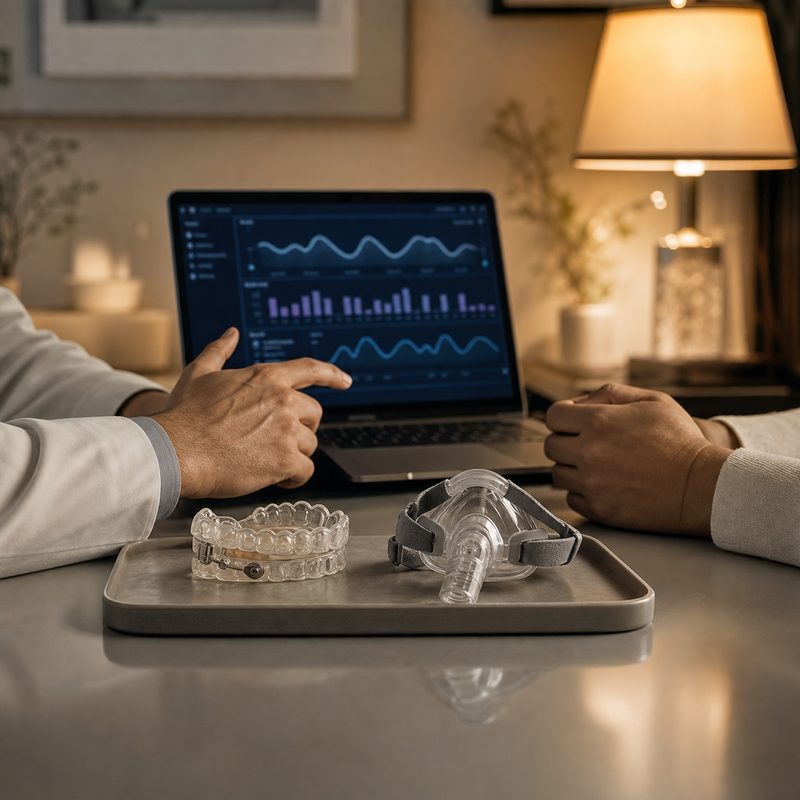
PAP is highly effective and often first-line, while guidelines support oral appliances for selected adults who prefer an alternative or cannot tolerate CPAP. Key points include portability, adherence, dental side effects, bite changes, monitoring, follow-up sleep testing and the need for dentist-physician collaboration. The most useful follow-up questions are often the ones people think of only during consultation: What if I do nothing? What if the first choice does not work? Which part of treatment is reversible? Which part depends on my compliance? What will I need to maintain five years from now? Answers to those questions make it easier to decide whether a plan fits your priorities.
How a proper assessment works
A careful assessment generally starts with a health and sleep history. Clinicians may ask about loud or habitual snoring, witnessed pauses, gasping, non-restorative sleep, morning headaches, dry mouth, daytime sleepiness, concentration changes and relevant medical conditions. A dental sleep medicine examination may include the teeth, gums, bite, jaw joints, muscle tenderness, tongue and palate, available space for an appliance, tooth mobility, restorations and periodontal support. None of these findings alone proves sleep apnea. Their value is in identifying risk, suitability for dental treatment and reasons to coordinate with a physician or sleep service. A useful consultation in London should end with more clarity than the patient had at the start. You should understand the working diagnosis, the records supporting it, reasonable alternatives, the sequence of care and the circumstances that could change the plan.
Treatment options and how clinicians choose among them
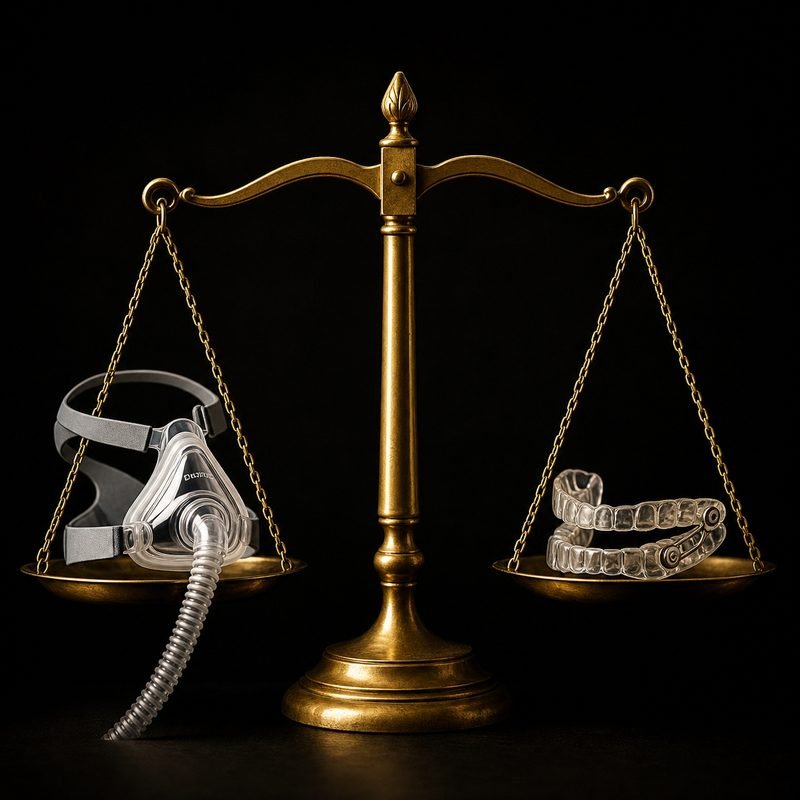
Treatment should be matched to diagnosis, severity, anatomy, symptoms, comorbidities and patient preference. Oral appliances are another evidence-based option for appropriate adults, particularly when a patient prefers an alternative or has difficulty tolerating CPAP, subject to clinician guidance. Positive airway pressure is highly effective and remains a central treatment for OSA. Lifestyle measures, positional therapy, management of nasal problems, weight management when relevant, and surgery are other possibilities for selected cases. The right plan may involve more than one modality, and a patient should not stop or replace prescribed therapy without discussing it with the treating clinician. A clinician should be able to explain not only why the recommended option can work, but also why the main alternatives are less suitable in this particular case. That comparative reasoning is more useful than a generic promise of speed or aesthetics.
For independent clinical context, review AASM/AADSM Oral Appliance Therapy Clinical Guideline. For a visual explainer, see About Oral Appliance Therapy for Sleep Apnea | AADSM. These resources are supplemental to an individual examination and treatment plan.
Benefits, limitations and risks to discuss before treatment
Custom mandibular advancement appliances need clinical oversight, not passive accessories. Advancing the lower jaw can lead to temporary jaw soreness, tooth tenderness, salivation or dry mouth, and over time may alter the bite or tooth position. A qualified dentist can adjust the device, monitor the jaw and bite, and communicate with the sleep physician. These effects are reasons for careful design and follow-up, not reasons to avoid treatment categorically. Follow-up sleep testing is important because feeling better or snoring less does not necessarily prove that breathing events are adequately controlled. Suitability or longevity cannot be guaranteed before an individual assessment. What can be expected is a transparent process: assessment, informed consent, monitoring and a contingency plan if the case behaves differently from the forecast.
What changes when you are choosing care in London
Clinical standards matter more than marketing language. When comparing providers in London for oral appliance vs CPAP, look for a clear explanation of the clinician’s role, the scope of the procedure and how multidisciplinary care is coordinated when needed. Ask who performs diagnosis, planning, surgery, restoration or follow-up; whether records will be reviewed with you; and how urgent problems are handled.
A real-world community perspective – useful, but not medical evidence
Community discussions about oral appliance vs CPAP can add language that formal clinical pages often miss. They show which inconveniences, anxieties and expectations matter to real patients. They should not be used to prove efficacy or diagnose a condition. A linked Reddit discussion can surface patient questions, while clinical decisions should remain anchored to professional or public-health guidance and an individual examination.
For qualitative patient questions and experiences, see Dental Devices for Apnea. Treat the discussion as anecdotal context, not evidence of efficacy, diagnosis or individual suitability.
How to prepare for a consultation
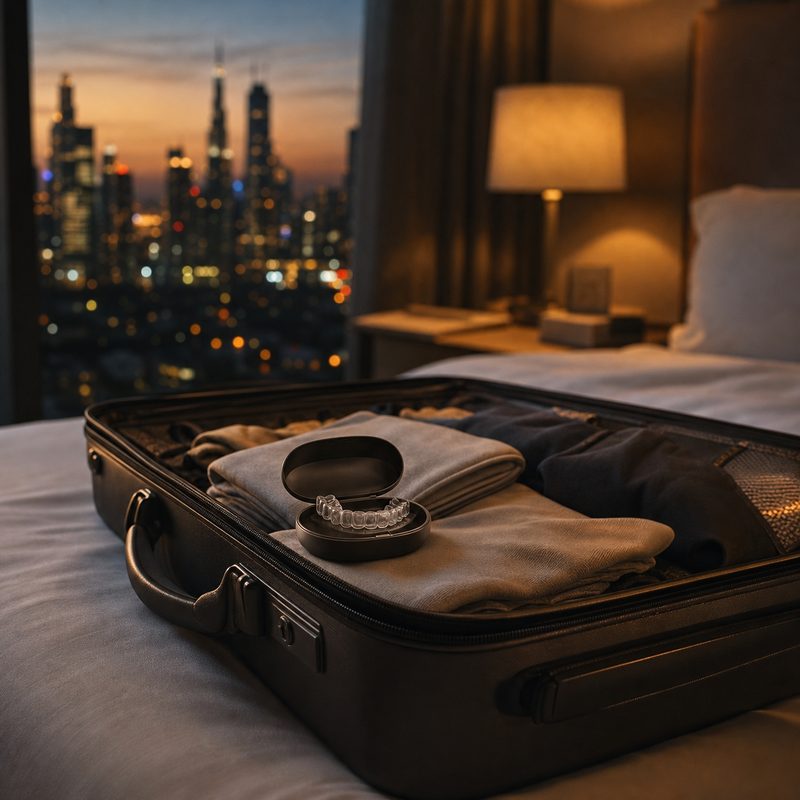
For oral appliance vs CPAP, a short pre-visit note can prevent important questions being forgotten. Record your goals, previous dental experiences, medical conditions, medications, allergies and the practical limits that matter to you, such as travel or work schedules. During the visit, ask for the plan in phases and make sure you understand which decisions can be deferred and which are time-sensitive.
Questions worth asking the dentist
Ask: What is the diagnosis? What evidence supports it? What happens if I monitor rather than treat now? What is the most conservative reasonable option? What would make you change the plan? Which parts are irreversible? What are the main risks for someone with my history? What maintenance will I need? How will we judge success objectively? These questions are especially useful for oral appliance vs CPAP because online content tends to show finished results while leaving out revisions and maintenance.
How to recognize an evidence-led treatment plan
For oral appliance vs CPAP, good clinical reasoning is visible in the sequence: define the problem, gather the right records, compare realistic options, obtain informed consent, carry out treatment conservatively and review the result. A plan becomes less persuasive when it relies mainly on before-and-after images, urgency or a promise that one technique is best for everyone.
Frequently asked questions
Can a dentist diagnose sleep apnea?
A dentist can screen for signs and assess dental suitability for oral appliance therapy, but obstructive sleep apnea is a medical diagnosis that should be established with an appropriate sleep evaluation and objective testing.
Does snoring always mean sleep apnea?
No. Primary snoring can occur without OSA, while many people with OSA do snore. Because the symptoms overlap, persistent or concerning snoring is a reason to seek proper assessment rather than self-diagnose.
Is an oral appliance the same as a night guard?
No. A night guard mainly protects teeth or changes how bite forces are distributed. A mandibular advancement oral appliance is designed to hold the lower jaw in a therapeutic position to help maintain the airway during sleep.
Can an oral appliance replace CPAP?
For some adults, an oral appliance is an evidence-based treatment option, especially when a patient prefers an alternative or cannot tolerate CPAP. Whether it is appropriate depends on the diagnosis and should be decided with the treating clinicians.
How do you know if an oral appliance is working?
Symptom improvement is helpful, but follow-up sleep testing is the objective way to confirm whether breathing events are adequately controlled. Dental follow-up is also needed to check comfort, jaw function and bite.
Where should I start if I am worried about sleep apnea in London?
Start with a medical or sleep-service assessment and tell your dentist about your symptoms. A dental sleep medicine dentist can contribute to screening, oral examination and treatment with an appliance when that is part of the agreed care plan.
Next step
If you are considering oral appliance vs CPAP in London, the next useful step is a consultation that confirms the diagnosis, explains alternatives and gives you a treatment plan tailored to your oral health, medical history and goals. Use the internal links below to review the relevant Dr. Sara Amini service pages and contact options.
Related Dr. Sara Amini pages: Sleep Apnea & Sleeping Disorders London; Adult Sleep Apnea Assessment; Contact Dr. Sara Amini London.
Medical content note
This article is educational and should be clinically reviewed before publication. It does not diagnose any individual, replace a dentist/physician consultation, or guarantee treatment suitability or outcomes. For suspected sleep apnea, diagnosis and treatment decisions should be coordinated with an appropriate medical sleep professional.
