


Dentist in London Blog
Can Teeth Grinding Be Linked to Sleep Apnoea?
14
Oct
Oct
Quick answer
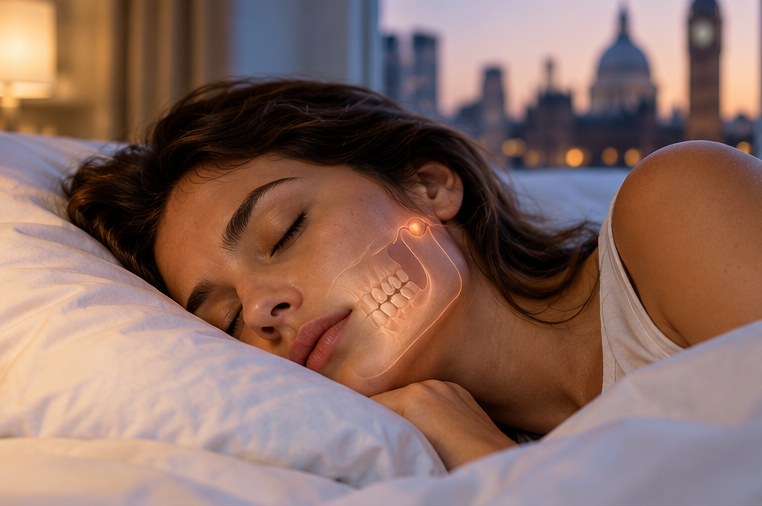
Teeth grinding, also called bruxism, and obstructive sleep apnoea can occur in the same person, particularly during sleep, but one does not automatically cause the other. Sleep bruxism is a pattern of jaw-muscle activity during sleep; obstructive sleep apnoea is a breathing disorder in which the upper airway repeatedly narrows or closes. The overlap matters because tooth wear, morning jaw fatigue, headaches, disturbed sleep and a partner hearing grinding can all be clues that deserve a broader assessment rather than an assumption that stress is the only explanation.
The NHS guidance on teeth grinding lists sleep problems such as snoring and sleep apnoea among factors linked with bruxism. The NHS sleep apnoea guide also explains that sleep apnoea requires proper assessment and testing. If grinding is accompanied by loud snoring, witnessed breathing pauses, gasping, marked daytime sleepiness or unrefreshing sleep, the sensible next step is to investigate the sleep symptoms as well as protecting the teeth.
What bruxism actually means
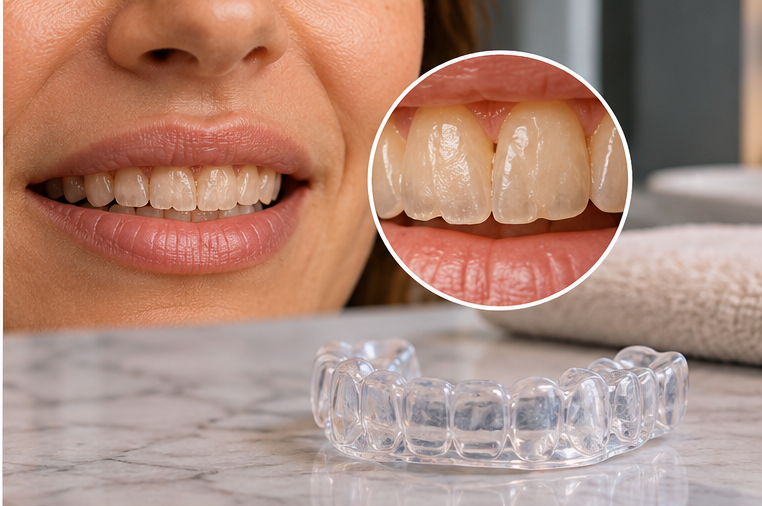
Bruxism describes clenching, grinding or jaw-muscle activity that can happen while awake or during sleep. Some people become aware of it because their partner hears grinding at night. Others notice morning jaw tightness, temple headaches, tooth sensitivity or chipped dental work. In many cases, the dentist is the first person to recognise the pattern because the teeth show flattening, cracks, fractures or areas of accelerated wear.
For a general overview, Bruxism on Wikipedia provides useful terminology, while the American Dental Association MouthHealthy page on teeth grinding describes common signs such as worn or damaged tooth edges, jaw tenderness and headaches. These resources are educational; an examination is needed to determine what is happening in an individual mouth.
Is teeth grinding a sign of sleep apnoea?
Not by itself. Sleep bruxism and obstructive sleep apnoea can be associated, but the relationship is complex. Grinding may occur around brief sleep arousals, and some people with sleep-disordered breathing also show bruxism. However, a worn tooth surface cannot tell a clinician whether someone has sleep apnoea, and the presence of bruxism does not establish the diagnosis.
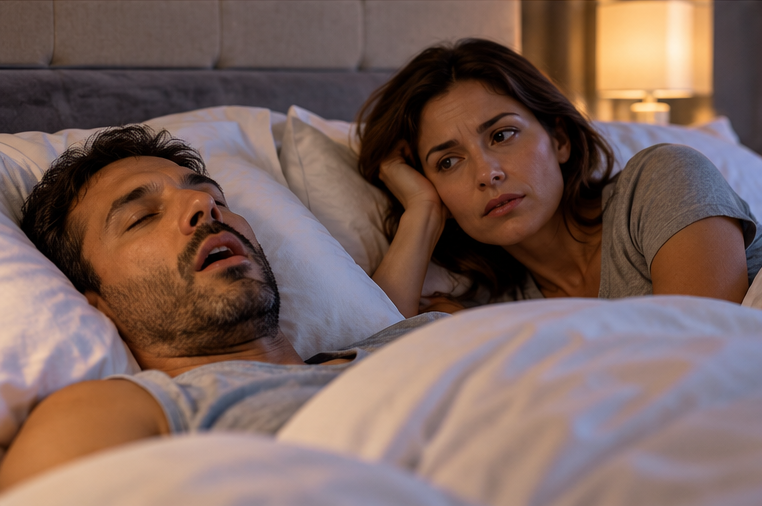
The practical point is that a cluster of symptoms is more meaningful than a single finding. If a patient has significant tooth wear together with loud snoring, witnessed pauses in breathing, choking or gasping, morning headaches, dry mouth, restless sleep or excessive daytime tiredness, it is reasonable to consider whether sleep-disordered breathing needs investigation.
Why simply fitting a night guard may not answer the whole question
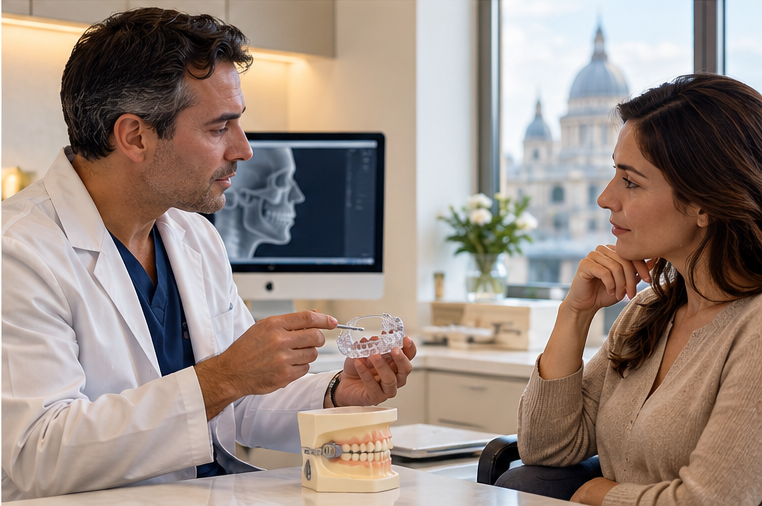
A night guard can be very useful for protecting teeth from further damage caused by grinding or clenching. But a protective splint and a mandibular advancement appliance have different jobs. A conventional guard is generally designed to reduce damage to the teeth and restorations. A mandibular advancement appliance is designed to hold the lower jaw in a therapeutic position during sleep as part of treatment for selected patients with snoring or diagnosed obstructive sleep apnoea.
If the only problem is tooth wear from bruxism, a protective appliance may be entirely appropriate. If the patient also has symptoms that raise concern about sleep apnoea, protecting the teeth should not replace a proper sleep assessment. Treating the visible dental consequence without asking why sleep is disturbed can leave an important part of the picture unexplored.
What a dentist can assess in London
A dental assessment can help identify how grinding is affecting the mouth and whether there are features that make dental sleep medicine relevant. Dr Amini may assess:
patterns of tooth wear, cracks, chipping and sensitivity
existing fillings, crowns, veneers or implants that may be exposed to heavy forces
the health and support of the teeth and gums
how the upper and lower teeth meet and whether the bite has changed
jaw-joint movement, clicking, tenderness or restricted opening
jaw-muscle tenderness or morning fatigue
the tongue, palate and oral anatomy where sleep-disordered breathing is being considered
whether a protective night guard, restorative treatment or further sleep assessment is appropriate
Dr Sara Amini provides dental sleep medicine and sleep-apnoea care in Central London. If worn teeth have already become a functional or restorative problem, the practice also provides full-mouth reconstruction for worn dentition, with treatment planning aimed at restoring lost tooth structure while preserving natural tooth tissue where clinically appropriate.
When should sleep apnoea be investigated?
Grinding alone is not enough to diagnose obstructive sleep apnoea. Sleep symptoms that deserve proper assessment include:
loud or habitual snoring
a partner noticing pauses in breathing
gasping, choking or snorting during sleep
waking frequently or feeling that sleep is broken
morning headaches or a dry mouth
feeling unrefreshed despite spending enough time in bed
difficulty concentrating or persistent daytime fatigue
falling asleep unintentionally during the day
Dr Amini’s website includes an adult sleep-apnoea assessment that can help identify common screening features. Screening is not the same as diagnosis. The NHS explains that suspected sleep apnoea may require referral to a sleep service and overnight testing to confirm whether breathing events are occurring and how severe they are.
How a proper assessment works
A clinically useful assessment starts with history rather than a device. The dentist needs to understand when the grinding occurs, whether pain or tooth damage is present, whether there is snoring or witnessed breathing disruption, and whether previous dental work has changed the bite or the way the teeth carry load. Relevant medical history, medication, alcohol and caffeine intake, smoking, stress and sleep quality can all add context.
The dental examination can then separate three questions: what needs protecting now, what has already been damaged, and whether sleep-related symptoms need medical investigation. In more advanced tooth wear, photographs, scans, bite analysis or trial restorations may be useful before definitive restorative treatment. If sleep apnoea is suspected, the medical diagnosis should be established through the appropriate sleep pathway rather than inferred from the teeth alone.
Treatment depends on what is actually causing the problem
There is no single treatment for everyone who grinds their teeth. If bruxism is causing wear but there is no sleep-disordered breathing, treatment may focus on protecting the teeth, managing jaw symptoms, addressing contributing behaviours and restoring damaged teeth where needed. If obstructive sleep apnoea is diagnosed, management may include positive airway pressure, lifestyle measures, positional therapy, management of nasal or airway problems, weight management when relevant, surgery in selected cases, or custom oral appliance therapy for appropriate adults.
The American Academy of Dental Sleep Medicine standards emphasise screening, comprehensive dental examination, appliance selection, calibration, side-effect management and long-term follow-up when oral appliance therapy is used. A protective bruxism guard and a sleep-apnoea oral appliance should therefore not be treated as interchangeable.
What if grinding has already worn down the teeth?
Long-term grinding can flatten biting surfaces, chip edges, fracture restorations and expose underlying dentine. Once significant tooth structure has been lost, simply making a guard may protect against further damage but will not replace what has already been worn away. The restorative plan then needs to consider function, tooth sensitivity, appearance, available enamel, bite relationships and the cause of the wear.
For patients with more extensive wear, Dr Amini’s full-mouth reconstruction page explains how treatment can be planned with wax-ups or digital design and, where appropriate, additive or minimally invasive techniques. The aim is not to “cover everything” automatically; it is to restore what is needed while controlling the forces or habits that contributed to the wear.
Benefits, limitations and risks to discuss before using an oral appliance
When oral appliance therapy is used for diagnosed sleep-disordered breathing, ongoing dental monitoring matters. Advancing the lower jaw can cause temporary jaw soreness, tooth tenderness, increased salivation or dry mouth, and over time can alter tooth position or the bite. These effects do not make treatment inappropriate; they are reasons for careful selection, calibration and follow-up.
Another important point is that symptom improvement does not always prove that obstructive breathing events are adequately controlled. A patient may snore less and still need objective follow-up to confirm that the therapy is effective. The treating sleep clinician may therefore recommend repeat sleep testing after the appliance has been adjusted.
What changes when choosing care in Central London?
Convenience is helpful, but continuity is more important than simply finding the closest appointment. Ask who is responsible for the dental assessment, who manages the sleep diagnosis, how records are shared, what follow-up is expected and what happens if tooth wear, bite changes or jaw symptoms progress. A good pathway should connect the dental and medical pieces rather than treating them as separate problems.
Dr Sara Amini’s London practice is at 1 King William Street, Bank, City of London, EC4N 7AR. To discuss bruxism, tooth wear or dental sleep medicine, book a consultation online or call +44 20 8226 0129. You can also email info@drsaraamini.co.uk.
A real-world community perspective
Online communities can be useful for understanding what patients worry about: whether grinding can damage restorations, whether jaw pain is normal, whether a night guard feels bulky, or whether poor sleep and grinding could be connected. They are not a substitute for diagnosis.
The Reddit bruxism treatment discussion is useful as qualitative patient context only. For evidence-led decisions, rely on examination and professional guidance. The source article also references the American Dental Association video on bruxism and teeth grinding as a supplemental visual explainer.
How to prepare for your consultation
A short amount of preparation can make the visit much more useful. Bring or note:
when jaw pain, headaches, tooth sensitivity or grinding were first noticed
whether a partner hears grinding, snoring, gasping or pauses in breathing
any previous night guards, retainers or oral appliances
a list of medications and relevant medical conditions
any previous sleep study, CPAP report or sleep-clinic letter
which outcome matters most to you: protecting teeth, reducing pain, improving sleep, restoring worn teeth, or understanding whether sleep apnoea needs investigation
Questions worth asking the dentist
Is the wear pattern consistent with grinding, acid erosion, another cause, or a combination?
Do my symptoms justify a sleep-apnoea assessment?
Do I need a protective night guard, restorative treatment, a sleep-related oral appliance, or more than one stage of care?
How will my jaw joints and bite be monitored?
If I already have significant tooth wear, what is the most conservative way to restore function?
How will we know whether any sleep-apnoea treatment is actually working?
Frequently asked questions
Can teeth grinding cause sleep apnoea?
Teeth grinding does not by itself prove or necessarily cause obstructive sleep apnoea. The two can coexist, and sleep bruxism may occur around sleep arousals, so significant grinding plus snoring, breathing pauses or daytime sleepiness is a reason to investigate the wider sleep picture.
Can a dentist diagnose sleep apnoea?
A dentist can screen for risk, identify oral findings and assess dental suitability for oral appliance therapy. Obstructive sleep apnoea should be diagnosed through an appropriate medical sleep assessment and objective testing.
Is a night guard the same as a sleep-apnoea appliance?
No. A night guard mainly protects teeth from grinding or clenching. A mandibular advancement appliance is designed to hold the lower jaw in a therapeutic position to help maintain the airway in selected patients.
Can a night guard stop me grinding my teeth?
A guard is usually intended to protect teeth and restorations from the effects of grinding rather than guarantee that the jaw activity stops. The most appropriate design depends on the diagnosis, bite, tooth condition and symptoms.
Can oral appliance therapy replace CPAP?
For some adults, oral appliance therapy is an evidence-based option, particularly when a patient prefers an alternative or has difficulty tolerating CPAP. Whether it is suitable should be decided in the context of the sleep diagnosis and the patient’s dental condition.
How do I know whether a sleep-apnoea appliance is working?
Feeling better or snoring less is encouraging, but objective follow-up sleep testing may be needed to confirm whether breathing events are adequately controlled. Dental review is also needed to check the bite, teeth, jaw joints and appliance.
Where should I start in London?
If you have grinding plus loud snoring, witnessed pauses, gasping or marked daytime sleepiness, start by discussing the sleep symptoms with an appropriate medical or sleep service and tell your dentist. Dr Amini can assess the dental consequences of bruxism and whether dental sleep medicine has a role in your care.
Next step
If you are concerned about teeth grinding, worn teeth, jaw fatigue or possible sleep apnoea, book a consultation with Dr Sara Amini in Central London. You can also review the Sleeping Disorders and Sleep Apnoea service and the Adult Sleep Apnoea Assessment before your visit. For appointments, call +44 20 8226 0129 or email info@drsaraamini.co.uk.
