


Uncategorized
TMJ Pain, Jaw Position and Sleep: What Is the Connection?
14
Oct
Oct
Quick answer
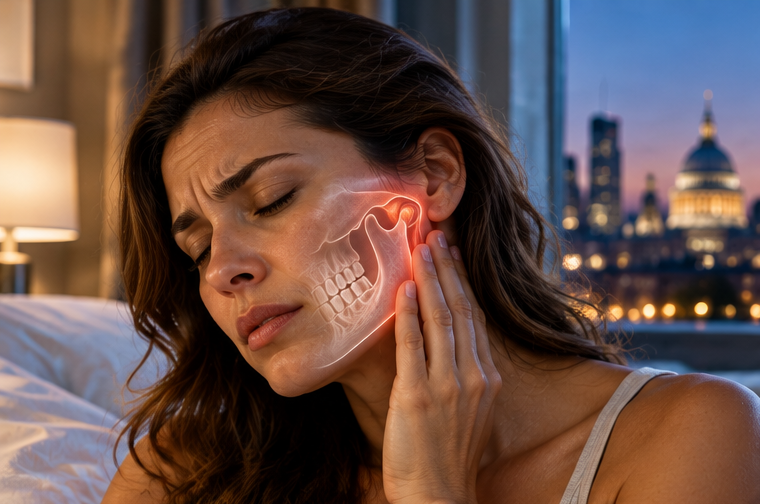
Jaw pain, temporomandibular disorders (TMD), snoring and obstructive sleep apnoea can occur in the same person, but one does not automatically cause the other. TMD refers to a group of conditions affecting the jaw joints, chewing muscles and associated structures, while obstructive sleep apnoea is a sleep-related breathing disorder in which the upper airway repeatedly narrows or closes during sleep.
Jaw position can influence airway mechanics, and mandibular advancement devices deliberately move the lower jaw forward during sleep in selected adults. That does not mean every patient with TMJ pain has sleep apnoea, or that every patient with sleep apnoea should be treated by changing the jaw position.
For UK patients, the NHS overview of temporomandibular disorder (TMD) describes symptoms such as jaw pain, clicking, headaches and difficulty opening the mouth. If sleep-disordered breathing is also suspected, medical sleep assessment and objective testing are needed; dental input can then help assess the teeth, bite, jaw joints and suitability for oral appliance therapy.
TMJ, TMD and sleep apnoea: three terms that should not be confused
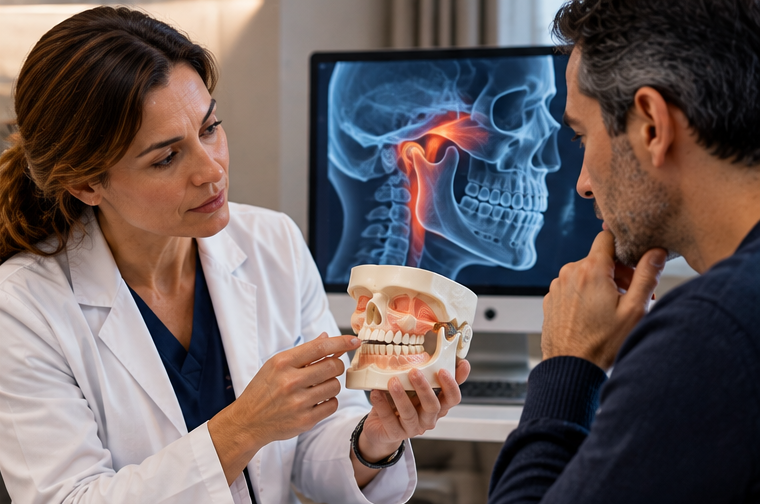
The temporomandibular joints, or TMJs, sit just in front of the ears and allow the lower jaw to open, close and move from side to side. TMD is the broader term for disorders involving these joints, the chewing muscles or both. Obstructive sleep apnoea, by contrast, involves recurrent upper-airway obstruction during sleep.
The National Institute of Dental and Craniofacial Research notes that TMD can involve pain in the jaw joint or chewing muscles, stiffness, locking and painful clicking or grating. It also recommends conservative approaches first and cautions against unnecessarily irreversible treatment of the jaw, teeth or bite.
Sleep apnoea has a different diagnostic pathway. Snoring, gasping, witnessed breathing pauses, morning headaches and daytime sleepiness can raise suspicion, but they do not establish the diagnosis on their own. A home sleep apnoea test or laboratory sleep study may be required depending on the clinical situation.
Why jaw position matters to the airway – but not in a simplistic way
The tongue and soft tissues of the upper airway are connected anatomically to the lower jaw and surrounding structures. Moving the mandible forward can alter the position of these tissues and may improve upper-airway patency in suitable patients. This principle is used in custom mandibular advancement devices for selected adults with snoring or obstructive sleep apnoea.
However, airway anatomy is only one part of the picture. Sleep apnoea severity, body position, nasal airflow, neuromuscular control, body weight, craniofacial anatomy and other medical factors can all influence the disorder. A dental examination cannot determine the full medical diagnosis from jaw position alone.
Dr. Sara Amini’s Sleep Apnoea & Sleeping Disorders London service is focused on the dental component of sleep-disordered breathing, including assessment for oral appliance therapy where appropriate.
Why some patients notice both jaw symptoms and poor sleep
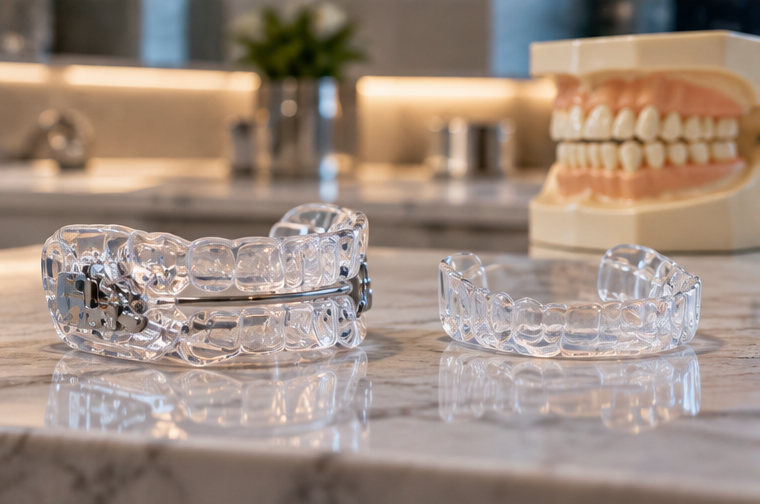
There are several reasons jaw symptoms and poor sleep may appear together. A patient may clench or grind, overwork the chewing muscles, experience stress-related muscle tension, have a pre-existing TMD, or develop jaw discomfort when using an appliance that changes mandibular position. Poor sleep itself can also amplify pain perception and reduce resilience.
Symptoms worth discussing include:
Jaw pain or tenderness on waking
Pain around the ear or temple
Clicking or painful popping when opening or closing
Jaw stiffness or episodes of locking
Morning headaches
Tired or sore chewing muscles
Teeth grinding or clenching
Worn, chipped or shortened teeth
Loud snoring or witnessed breathing pauses
Waking while gasping or choking
Unrefreshing sleep or excessive daytime sleepiness
These findings should be interpreted together rather than used as shortcuts. For example, painless clicking is common and does not automatically require treatment, while marked daytime sleepiness or witnessed breathing pauses justify a different level of medical attention.
How a proper assessment works in London
A useful assessment begins with the history. The clinician may ask when the jaw pain started, whether it is worse in the morning or evening, whether there is locking, whether a partner hears grinding or snoring, and whether there are sleep-related symptoms such as gasping, headaches or daytime tiredness.
The dental examination may include the teeth, gums, existing restorations, bite, range of jaw movement, joint tenderness, muscle tenderness, tooth wear, tooth mobility and the oral structures relevant to appliance therapy. If sleep apnoea is suspected but has not been diagnosed, the dental role is to recognise the concern and help direct the patient toward appropriate medical sleep assessment.
Patients with extensive tooth wear can also review Dr. Amini’s Full Mouth Reconstruction London page, because severe grinding or erosion may require a restorative plan that is separate from any sleep-related treatment.
Night guard vs. mandibular advancement device: they are not the same thing
A conventional night guard is generally used to protect teeth from wear or redistribute forces associated with clenching and grinding. A mandibular advancement device is designed for a different purpose: it holds the lower jaw forward during sleep to influence the upper airway.
This distinction matters because treating worn teeth with a protective guard does not diagnose or treat obstructive sleep apnoea. Equally, a mandibular advancement device should not be fitted as if it were a generic mouthguard. It changes jaw position for several hours each night and therefore requires appropriate assessment, design, calibration and follow-up.
The American Academy of Dental Sleep Medicine’s current standards cover patient screening, comprehensive dental examination, appliance selection, calibration, management of side effects and long-term follow-up.
Can an oral appliance make TMJ symptoms worse?
It can in some patients, particularly during adaptation or if the starting jaw position, amount of advancement or existing joint and muscle condition is not considered carefully. Potential effects include temporary morning jaw soreness, tenderness of the chewing muscles, tooth discomfort and changes in the bite.
That does not mean a history of jaw symptoms automatically rules out oral appliance therapy. It means the joint, muscles, bite and teeth should be documented before treatment and reviewed afterwards. If symptoms change, the appliance may need adjustment, the rate of advancement may need to slow, or the treatment plan may need to be reconsidered.
AADSM’s published material on oral-appliance side-effect management specifically addresses temporomandibular-joint and masticatory-muscle side effects as part of ongoing care.
What treatment options might be discussed?
Treatment depends on which problem is actually present. TMD is often managed conservatively at first, while obstructive sleep apnoea requires a medical treatment plan matched to diagnosis and severity. When both issues coexist, the plan may need coordination between dental, medical and sometimes physiotherapy or other specialist care.
Depending on the diagnosis, options can include:
Conservative self-care for TMD, such as reducing aggravating habits and allowing the jaw to rest
Medication or physiotherapy when clinically appropriate
Management of clenching or grinding where this is contributing to tooth wear or muscle pain
CPAP or other positive-airway-pressure therapy for obstructive sleep apnoea
A custom mandibular advancement device for selected adults
Positional or lifestyle strategies where recommended by the treating sleep clinician
Management of nasal or other airway factors
Restorative treatment for damaged or severely worn teeth where needed
Patients already using prescribed CPAP should not stop or replace it simply because a dental device appears more convenient. Changes should be discussed with the clinician responsible for the sleep-apnoea diagnosis and management.
Why conservative treatment matters when the jaw joint hurts
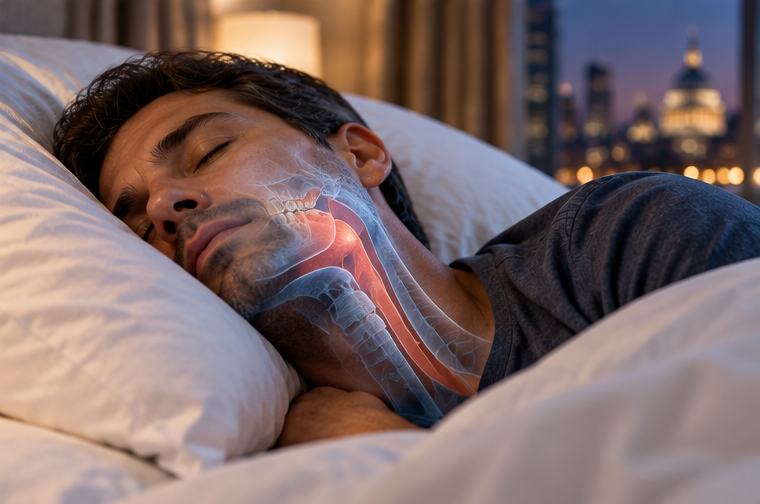
TMD is a field in which overtreatment can be a real concern. Many jaw-joint and muscle symptoms improve with time and conservative care, and not every clicking joint needs intervention. The NHS and NIDCR both emphasise simple, reversible approaches before treatment that permanently changes the teeth, bite or joint.
This is particularly relevant if a patient is simultaneously considering restorative or cosmetic dental work. A treatment plan should distinguish the cause of pain, the cause of tooth wear and the reason for any sleep-related symptoms before irreversible dentistry is started.
What changes when choosing care in Central London?
For a London patient, continuity matters as much as proximity. Ask who is responsible for the medical sleep diagnosis, who manages the dental appliance, how jaw symptoms are documented, and how communication happens if the sleep clinician and dentist are in different practices.
Dr. Sara Amini sees patients at 1 King William Street, Bank, City of London, London EC4N 7AR. Book a Central London consultation or call +44 20 8226 0129. You can also email info@drsaraamini.co.uk.
A real-world community perspective – useful, but not medical evidence
People living with jaw pain and poor sleep often describe overlapping experiences online: morning tightness, difficulty tolerating a mouthguard, uncertainty about whether grinding is the cause of the pain, and concern about whether an oral appliance could make the jaw worse.
The TMJ community on Reddit can be useful for seeing the questions patients ask in real life. Individual posts are anecdotal and should not be used to diagnose TMD, sleep apnoea or determine treatment suitability.
For a short visual introduction to oral appliance therapy, the AADSM oral appliance therapy explainer can provide additional context.
How to prepare for your consultation
Bring any previous sleep-study reports, CPAP information, dental records or scans that may be relevant. Note when jaw symptoms occur, whether they are worse on waking, whether the joint clicks or locks, whether a partner hears grinding or snoring, and whether you have daytime sleepiness or morning headaches.
Useful questions include:
Do my symptoms fit a TMD, a sleep disorder, or both?
What part of the problem can be assessed dentally?
Do I need a formal sleep study or sleep-physician review?
Is my current night guard protecting my teeth but leaving a sleep problem unassessed?
If an oral appliance is considered, how will my TMJs and bite be monitored?
What side effects should I report immediately?
How will we confirm objectively that sleep treatment is working?
If my teeth are worn, should restorative treatment wait until the cause is better understood?
Frequently asked questions
Can TMJ pain be caused by sleep apnoea?
Not automatically. TMD and obstructive sleep apnoea can coexist, and sleep problems can influence pain and muscle tension, but TMJ pain has many possible causes. The correct approach is to assess the jaw problem and any suspected sleep-disordered breathing separately, then look at how they interact.
Can teeth grinding be a sign of sleep apnoea?
Sleep bruxism and sleep-disordered breathing can occur in the same person, but grinding alone does not diagnose sleep apnoea. If grinding occurs with loud snoring, witnessed breathing pauses, gasping or significant daytime sleepiness, further sleep assessment may be appropriate.
Is jaw clicking dangerous?
Painless clicking is common and does not always need treatment. Painful clicking, locking, reduced opening or persistent jaw pain deserves clinical assessment, especially when it affects eating, sleep or day-to-day function.
Can a night guard treat sleep apnoea?
A conventional protective night guard is not the same as a mandibular advancement device used for selected sleep-apnoea patients. A night guard may protect teeth from grinding, but it does not establish a sleep diagnosis or automatically manage airway obstruction.
Can an oral appliance worsen jaw pain?
Some patients experience temporary jaw or muscle soreness, and longer-term bite changes can occur. A qualified dentist should assess the jaw and bite before treatment, adjust the device where needed and monitor symptoms during follow-up.
Where should I start if I have jaw pain and symptoms of sleep apnoea in London?
Start by making sure both concerns are assessed rather than assuming one explains the other. A dental sleep medicine consultation can evaluate the oral and jaw factors, while suspected sleep apnoea requires appropriate medical sleep assessment and objective testing.
Next step
If you have persistent jaw pain, grinding, worn teeth, loud snoring or a diagnosed sleep-related breathing disorder, a joined-up assessment can help separate the problems and identify where dental treatment fits. Book a consultation with Dr. Sara Amini in Central London, review the Sleep Apnoea & Sleeping Disorders London service, or explore Full Mouth Reconstruction if significant tooth wear is part of the problem.
