


Dentist in London Blog
What a sleep apnea dentist in London really does
23
Sep
Sep
Sleep-disordered breathing covers a spectrum from primary snoring to obstructive sleep apnea (OSA). OSA is not diagnosed from snoring alone; diagnosis requires a medical sleep evaluation and objective testing such as a home sleep apnea test or laboratory polysomnography when appropriate.
Dentists can contribute by screening for oral and craniofacial features, asking about symptoms, recognizing tooth wear or jaw findings that may coexist with poor sleep, and collaborating with sleep physicians.
For selected adults, custom oral appliance therapy can be part of treatment, but it should be planned, fitted and monitored rather than treated as a generic mouthguard.
That definition matters in Central London: two treatments can target the same symptom while solving very different underlying problems. A consultation should therefore connect every recommendation to a diagnosis or clearly stated treatment goal.
For a general background definition, you can also review Sleep apnea – Wikipedia. Wikipedia is used here for entity context rather than as a substitute for clinical guidance.
Could your symptoms be sleep apnoea?
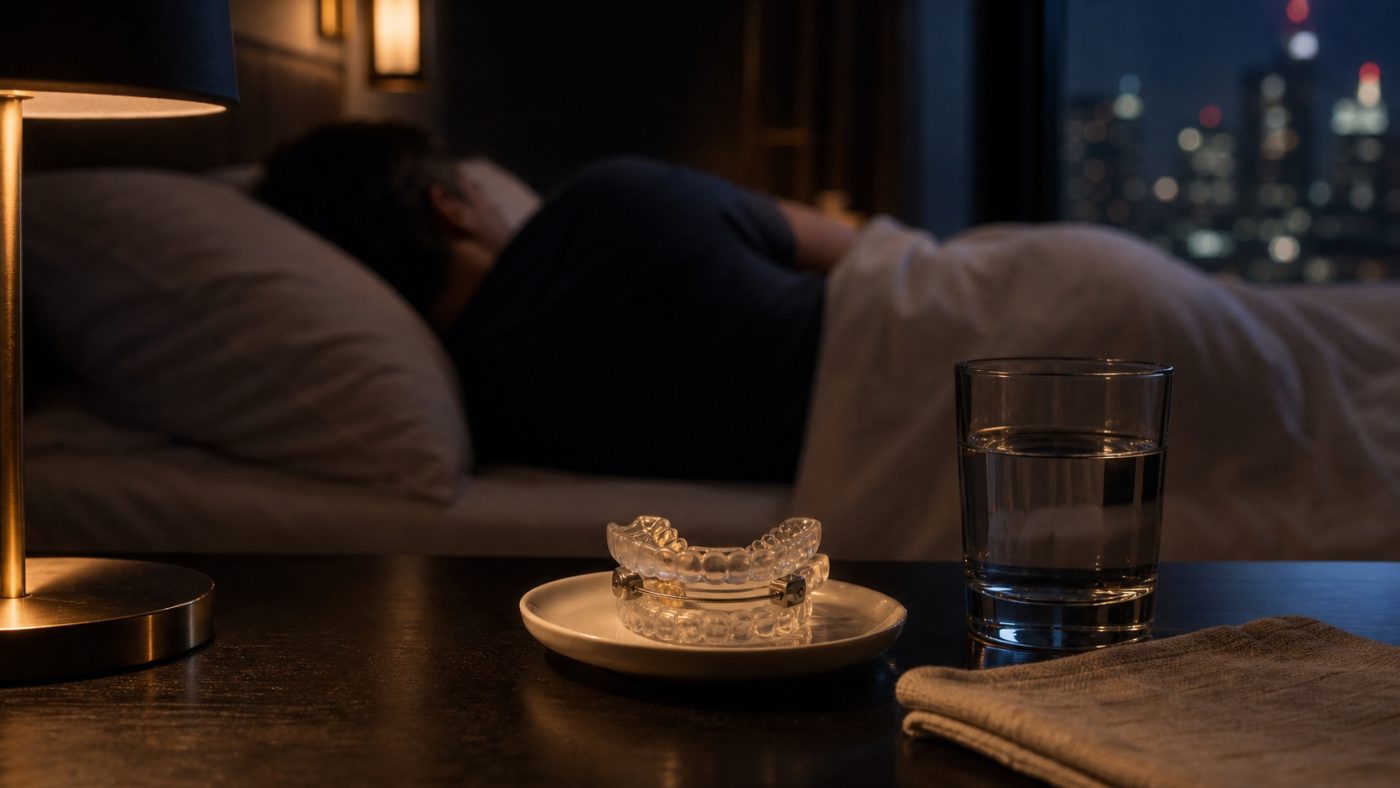
Snoring is common. It can be disruptive and frustrating, but it does not automatically mean that someone has obstructive sleep apnoea.
Sleep apnoea happens when the airway narrows or closes repeatedly during sleep. This can disturb sleep quality and, in some people, affect daytime energy, concentration, mood and overall health.
It is sensible to seek assessment if snoring occurs alongside one or more of the following:
- Your partner notices pauses in your breathing while you sleep
- You wake gasping, choking or snorting
- You feel tired despite allowing enough time for sleep
- You fall asleep unintentionally during the day
- You wake with a headache or dry mouth
- Your sleep feels restless or broken
- You struggle with concentration, mood or daytime energy
- Your snoring is becoming more frequent or more disruptive
The NHS has a clear overview of sleep apnoea symptoms and treatment options: Sleep apnoea – NHS.
If you have severe daytime sleepiness, feel sleepy while driving, or work in a role where tiredness could put you or others at risk, seek medical advice promptly. Do not drive if you do not feel alert enough to drive safely.
What can a dentist do for sleep apnoea?
A dentist does not diagnose obstructive sleep apnoea simply by looking in your mouth. Diagnosis should be made through an appropriate sleep assessment, usually involving a sleep clinician and objective testing.
However, dentistry can play an important part in the wider care pathway.
A dental sleep medicine consultation may include an assessment of:
- Your teeth, gums and existing dental work
- Tooth wear, mobility and periodontal support
- Your bite and how your teeth meet
- Your jaw joints, muscles and range of movement
- The tongue, palate and space available for an appliance
- Any existing retainers, night guards or sleep appliances
- Factors that may affect comfort, safety or long-term appliance use
These findings help answer a practical question: could a custom mandibular advancement appliance be a sensible and safe option for you?
They can also identify dental issues that should be stabilised before treatment, such as active gum disease, loose teeth, untreated decay, jaw discomfort or a bite that may be vulnerable to change.
For more information about the wider service, visit Sleep Apnoea and Sleeping Disorders in London.
What is a mandibular advancement appliance?
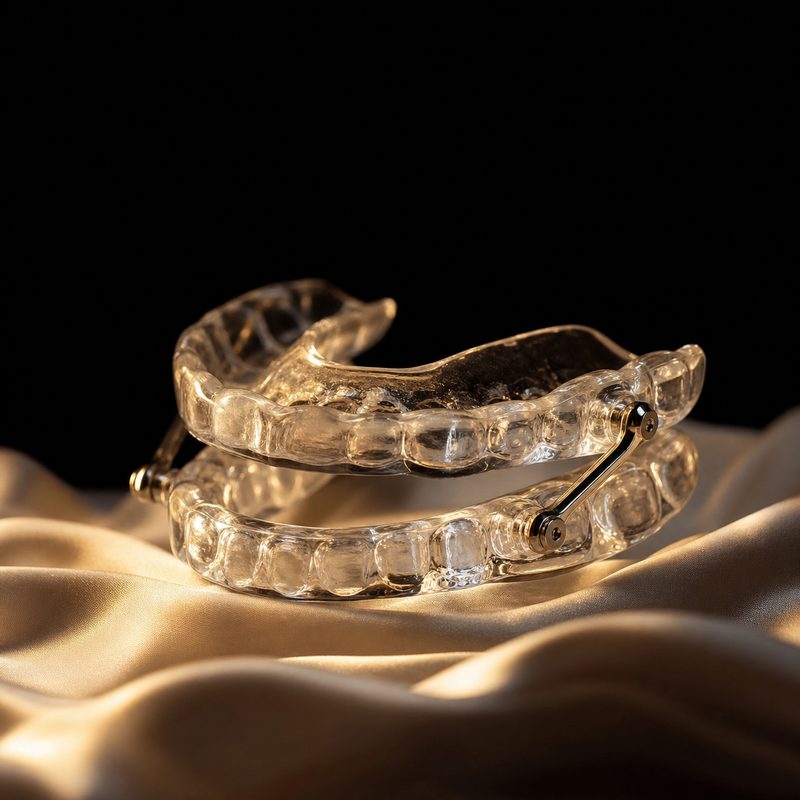
A mandibular advancement appliance is a custom-made dental device worn during sleep. It is designed to hold the lower jaw gently forward, which may help maintain a more open airway in suitable patients.
It is different from a standard night guard.
A night guard is usually used to protect teeth from grinding or clenching. A mandibular advancement appliance is designed for snoring or obstructive sleep apnoea and is made around your bite, teeth, jaw movement and treatment needs.
A well-made appliance should be:
- Custom-fitted rather than bought off the shelf
- Adjustable, so the jaw position can be altered gradually if needed
- Comfortable enough to wear consistently
- Reviewed regularly by a dentist
- Used as part of a wider sleep-management plan where appropriate
Generic anti-snoring mouthguards sold online may seem convenient, but they cannot assess your jaw joints, gums, bite, dental stability or sleep diagnosis. They also do not replace a medical sleep assessment.
For a visual introduction to this type of treatment, you may find this AADSM video on oral appliance therapy useful.
Can an oral appliance replace CPAP?
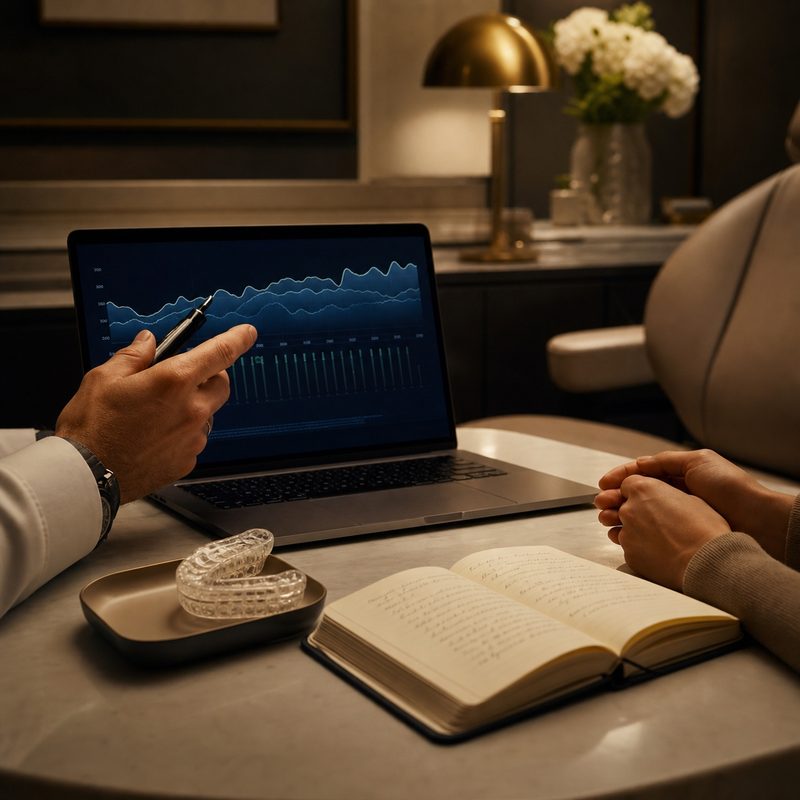
For some adults with diagnosed obstructive sleep apnoea, an oral appliance can be an effective treatment option. It may be considered when a patient cannot tolerate CPAP, prefers an alternative where clinically appropriate, or has a treatment plan agreed with their sleep clinician.
CPAP remains an important treatment for many people, especially where it is clinically indicated. It should not be stopped or replaced without discussing this with the clinician managing your sleep apnoea.
Whether an oral appliance is appropriate depends on more than the fact that you snore. Your dentist and sleep clinician may consider:
- The results of your sleep study
- The severity of your sleep apnoea
- Your symptoms and medical history
- Your experience with CPAP, if you use it
- The health and stability of your teeth and gums
- Your jaw joints and bite
- Your ability to attend follow-up appointments
- Your personal preferences and practical needs
NICE guidance supports customised or semi-customised mandibular advancement splints in selected adults with obstructive sleep apnoea. The guideline also stresses the importance of appropriate review, including symptoms, side effects, dentition and changes in bite. NICE guideline NG202 provides the relevant UK clinical framework.
What happens at a consultation?
A consultation should be an opportunity to understand what is happening, rather than simply being told that you need an appliance.
You may be asked about:
- Snoring, breathing pauses, choking or gasping at night
- Daytime sleepiness and whether you wake refreshed
- Previous sleep studies, CPAP reports or medical letters
- Your medical history, medication and allergies
- Previous dental treatment
- Jaw pain, clicking, clenching or tooth grinding
- Your goals, concerns and practical needs
The dental assessment may involve examining your teeth, gums, bite, jaw joints and oral anatomy. If you already have a sleep-study report, please bring it with you where possible. It helps ensure that any discussion about treatment is based on your diagnosis and wider care plan.
At the end of the consultation, you should understand:
- Whether an oral appliance appears suitable
- What further assessment or medical information may be needed
- The benefits and limitations of treatment in your situation
- The likely sequence of appointments
- What follow-up and monitoring would involve
- What alternatives are available
You can find further information about the process on the Adult Sleep Apnoea Assessment page.
Benefits, side effects and follow-up
Some patients find an oral appliance easier to travel with or more comfortable than CPAP. It is small, discreet and does not require a mask or machine. However, the right treatment is the one that is clinically appropriate, effective and realistic for you to use consistently.
Like all treatments, oral appliances have potential side effects. These may include:
- Temporary jaw or muscle soreness
- Tooth tenderness
- Increased saliva or dry mouth
- Changes in bite
- Gradual tooth-position changes over time
- The need for adjustments, repairs or replacement
These possible effects are one reason why follow-up matters. A custom appliance should be monitored—not simply fitted once and forgotten.
Feeling less tired or hearing fewer complaints about snoring can be encouraging. However, symptom improvement alone does not always show whether sleep apnoea has been adequately controlled. In some cases, your sleep clinician may recommend follow-up sleep testing to assess how well treatment is working.
The joint American Academy of Sleep Medicine and American Academy of Dental Sleep Medicine guidance supports dentist oversight of oral appliances and follow-up sleep testing where appropriate. AASM/AADSM oral appliance therapy guideline.
Questions patients often ask
Can a dentist diagnose sleep apnoea?
A dentist can recognise possible signs, ask about symptoms and assess whether your mouth and jaw are suitable for an oral appliance. Obstructive sleep apnoea is a medical diagnosis and should be established through appropriate sleep assessment and testing.
Does snoring always mean sleep apnoea?
No. Some people snore without having sleep apnoea. However, persistent snoring combined with breathing pauses, choking, tiredness or poor-quality sleep should be assessed properly.
Is a sleep apnoea appliance the same as a night guard?
No. A night guard is generally designed to protect the teeth from grinding or clenching. A mandibular advancement appliance is designed to position the lower jaw forward during sleep as part of treatment for selected patients with snoring or diagnosed obstructive sleep apnoea.
Will an oral appliance work for everyone?
Suitability depends on your sleep diagnosis, symptoms, oral health, teeth, gums, bite, jaw joints and medical history. A proper assessment is needed before treatment is planned.
How will I know if the appliance is working?
Your symptoms, comfort, jaw health and bite will all be reviewed. When advised by your treating clinician, follow-up sleep testing can help confirm whether breathing events are being adequately controlled.
Sleep apnoea and driving: what the DVLA requires
This is usually the part people are most anxious about, so here it is plainly. These are legal duties, not suggestions.
DVLA rules for car and motorcycle (Group 1) licences
• OSA without excessive sleepiness: you may drive as normal, and you do not need to tell the DVLA.
• Suspected OSA with excessive sleepiness: do not drive until you have been diagnosed and a sleep clinic confirms your sleepiness is controlled.
• Mild OSA with excessive sleepiness: do not drive until it is controlled. If it is not controlled within three months, you must tell the DVLA.
• Moderate or severe OSA with excessive sleepiness: do not drive, and you must tell the DVLA. Licensing resumes once your clinic confirms treatment is working and you are using it.
“Excessive sleepiness” means sleepiness that has, or is likely to have, an adverse effect on driving. Rules are stricter for bus, coach and lorry (Group 2) licences. The current position is set out by the DVLA and by the British Thoracic Society.
Treatment is what restores driving, so this is a reason to get assessed rather than a reason to avoid it.
Sleep apnoea and driving: what the DVLA requires
This is usually the part people are most anxious about, so here it is plainly. These are legal duties, not suggestions.
DVLA rules for car and motorcycle (Group 1) licences
• OSA without excessive sleepiness: you may drive as normal, and you do not need to tell the DVLA.
• Suspected OSA with excessive sleepiness: do not drive until you have been diagnosed and a sleep clinic confirms your sleepiness is controlled.
• Mild OSA with excessive sleepiness: do not drive until it is controlled. If it is not controlled within three months, you must tell the DVLA.
• Moderate or severe OSA with excessive sleepiness: do not drive, and you must tell the DVLA. Licensing resumes once your clinic confirms treatment is working and you are using it.
“Excessive sleepiness” means sleepiness that has, or is likely to have, an adverse effect on driving. Rules are stricter for bus, coach and lorry (Group 2) licences. The current position is set out by the DVLA and by the British Thoracic Society.
Treatment is what restores driving, so this is a reason to get assessed rather than a reason to avoid it.

Patient experiences and further reading
Patients often turn to online communities because they want to know how other people cope with snoring, CPAP, sleep testing and oral appliances. These discussions can be reassuring and may help you prepare questions for your consultation.
For an example of patient discussion, see “GP suggested seeing a dentist for my snoring” on Reddit.
Reddit posts are personal experiences, not medical advice. They cannot diagnose sleep apnoea or tell you which treatment is right for you.
For general background reading only, you may also wish to see Sleep apnoea on Wikipedia. For medical decisions, rely primarily on the NHS, NICE guidance and advice from your own treating clinicians.
Arrange a consultation in London
If you are concerned about snoring, have been diagnosed with sleep apnoea, are considering an oral appliance, or want to understand your options before starting treatment, Dr Sara Amini can assess the dental aspects of your care and discuss whether a custom appliance may be appropriate.
To arrange a consultation, please contact Dr Sara Amini in London.
Medical information notice
This article is for general information only. It does not diagnose sleep apnoea, replace medical assessment or guarantee that an oral appliance will be suitable or effective for an individual. Diagnosis and treatment should be based on an appropriate sleep assessment, medical history, oral examination and personalised treatment plan.
Related Dr. Sara Amini pages: Sleep Apnea & Sleeping Disorders London; Adult Sleep Apnea Assessment; Contact Dr. Sara Amini London.
